Amir Mahmud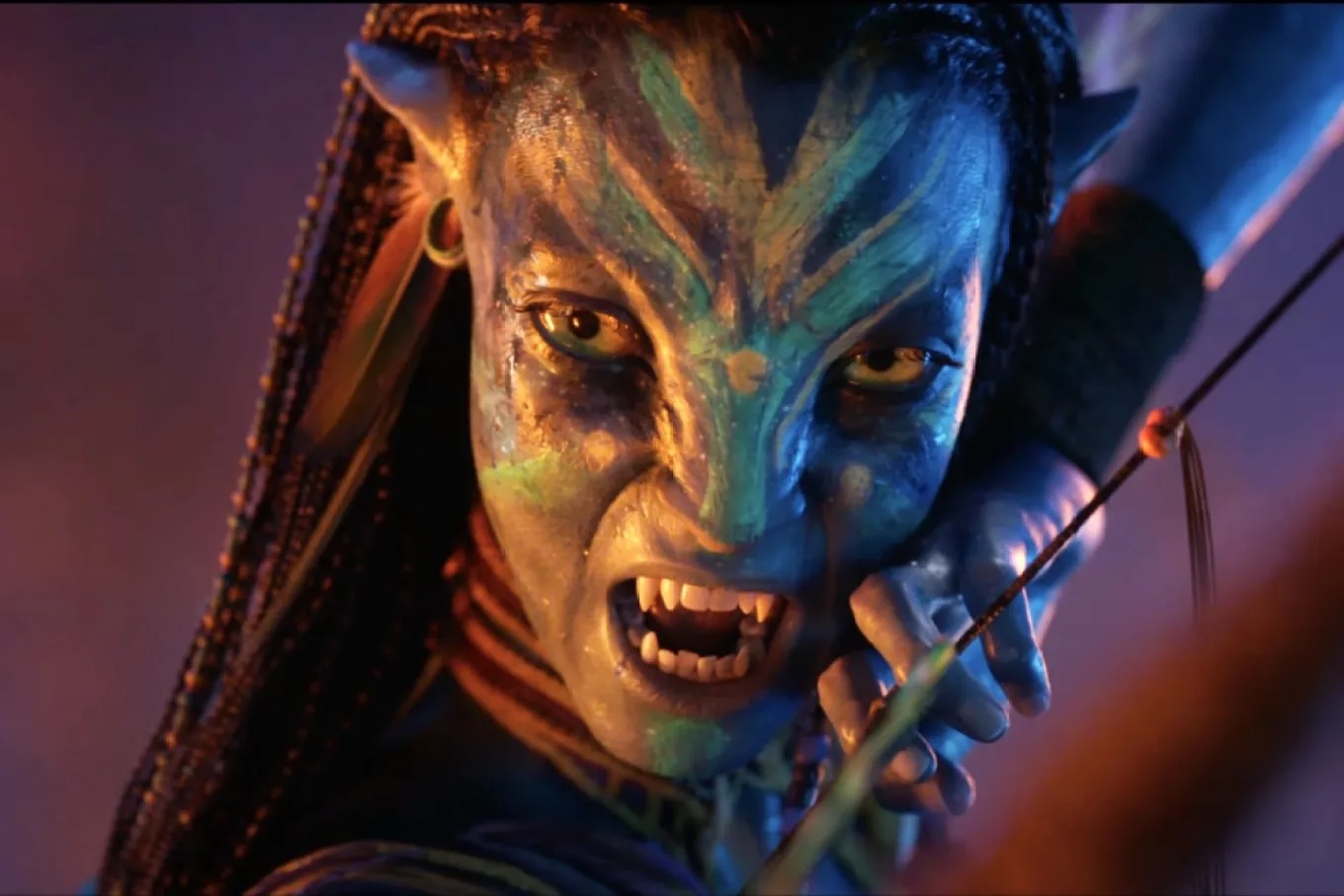
Esteemed filmmaker James Cameron, renowned for pushing the boundaries of cinematic visual effects, recently voiced profound apprehension regarding the proliferation of generative artificial intelligence in the creative sphere. His comments, made during a CBS Sunday Morning interview in anticipation of his forthcoming film, Avatar: Fire and Ash, underscore a growing schism within the entertainment industry concerning the appropriate role of advanced algorithmic technologies. Cameron, whose blockbusters like Avatar and Titanic have consistently leveraged cutting-edge innovations, drew a sharp distinction between his embrace of performance capture and the emerging capabilities of AI to autonomously fabricate creative elements.
A Filmmaker’s Stance on Technological Evolution
Cameron’s career trajectory is inextricably linked with technological pioneering. From the groundbreaking liquid metal effects in Terminator 2: Judgment Day to the immersive digital environments of Avatar, his filmography is a testament to the strategic deployment of advanced tools to realize ambitious narrative visions. However, this history of innovation has always been characterized by a selective approach, prioritizing techniques that augment human performance and storytelling rather than diminish them.
Performance capture, a cornerstone of the Avatar saga’s photorealistic Na’vi characters, exemplifies this philosophy. The technique involves recording an actor’s movements and facial expressions, translating them into digital data that animators then use to drive virtual characters. This method, pioneered in films decades ago and significantly refined by Weta Digital for films like The Lord of the Rings and Avatar, is fundamentally about translating human input into a digital realm. As Cameron elaborated, despite superficial similarities to digital creation, it represents "the opposite" of generative AI. He views it as an exaltation of the collaborative moment between actor and director, where human emotion and physical performance remain the genesis of the digital output. The CBS segment itself highlighted this commitment, showcasing actors undergoing rigorous training and performing elaborate underwater sequences in a massive 250,000-gallon tank—a testament to the tangible, human effort underpinning the digital spectacle.
In stark contrast, Cameron articulated his deep concern over generative AI, describing its capacity to conjure characters, actors, and performances "from scratch with a text prompt" as "horrifying." He emphasized that such an approach fundamentally diverges from the principles guiding his own technological adoption. His stance is particularly resonant given his stature as a director who has consistently expanded what is visually achievable in cinema, yet now draws a firm line against what he perceives as a potentially corrosive form of technological advancement.
The Rise of Generative AI in Creative Industries
Generative artificial intelligence refers to a class of AI models capable of producing novel content, such as images, text, audio, and video, based on patterns learned from vast datasets. Unlike traditional AI, which might analyze data or perform specific tasks, generative AI creates. This field has witnessed an exponential acceleration in recent years, moving from academic curiosities to tools accessible to the public.
The timeline of generative AI’s impact on public consciousness is remarkably short but impactful. Tools like DALL-E 2, Midjourney, and Stable Diffusion emerged, allowing users to generate complex images from simple text prompts. The subsequent rise of large language models like ChatGPT demonstrated AI’s capacity for coherent and creative text generation, from poetry to scripts. More recently, advancements like OpenAI’s Sora have showcased the ability to generate photorealistic video clips from text descriptions, signaling a potential paradigm shift for industries heavily reliant on visual content creation.
These developments have sparked a complex debate within the creative industries. Some view generative AI as a revolutionary efficiency tool, capable of rapidly iterating on ideas, assisting with pre-visualization, or automating mundane tasks. Others, like Cameron, see it as a fundamental threat to the authenticity, intellectual property, and very existence of human creative roles. The burgeoning capabilities of these models have ignited discussions about the future of work for writers, actors, concept artists, illustrators, and visual effects specialists, many of whom fear displacement by algorithms.
The Creative and Ethical Dilemmas
Cameron’s "horrifying" assessment taps into a broad spectrum of creative and ethical dilemmas currently confronting Hollywood and other artistic sectors. One primary concern revolves around the impact on human creativity itself. While some argue AI democratizes creation by lowering barriers to entry, others contend it risks devaluing the unique spark of human ingenuity, reducing art to a series of algorithmic calculations. If machines can generate compelling narratives or visuals, what becomes of the human artist’s distinct voice and perspective?
Intellectual property is another contentious area. Generative AI models are trained on immense datasets, often comprising copyrighted material sourced from the internet without explicit permission or compensation for the original creators. This practice has led to numerous lawsuits from artists, authors, and news organizations, challenging the legality and ethics of using their work to train commercial AI systems. The question of who owns the copyright to AI-generated content—the user, the AI developer, or no one—remains largely unsettled in legal frameworks worldwide.
The concept of authenticity and authorship is also under scrutiny. In an era where AI can generate photorealistic deepfakes or synthesize performances, the line between reality and simulation blurs. Will audiences distinguish between human-acted and AI-generated content? What implications does this hold for the integrity of storytelling and the emotional connection viewers form with characters, knowing they might be entirely synthetic? The "uncanny valley," a phenomenon where near-human but not quite human figures evoke revulsion, is a persistent challenge for synthetic character generation, though AI is rapidly closing this gap.
Furthermore, the labor market impact is a central point of contention. Major Hollywood unions, including the Screen Actors Guild – American Federation of Television and Radio Artists (SAG-AFTRA) and the Writers Guild of America (WGA), made AI usage a cornerstone of their recent strike negotiations. Actors expressed fears of their likenesses being scanned and endlessly reused without consent or fair compensation, while writers worried about AI generating scripts or story outlines, diminishing their creative input and economic value. These negotiations highlighted the urgent need for clear guidelines, consent protocols, and equitable compensation models for human labor in an increasingly AI-integrated production pipeline.
Beyond the "Horrifying": A Spectrum of Views
While Cameron’s strong condemnation resonates with many, the industry’s perspective on generative AI is not monolithic. A more nuanced view acknowledges AI’s potential as a powerful tool rather than an outright replacement for human creativity. For instance, AI could assist in generating multiple concept art variations, speeding up pre-visualization processes, or handling mundane tasks like rotoscoping or background element generation, freeing human artists for more complex, creative work.
Proponents argue that generative AI, when wielded by human artists, can amplify their capabilities, allowing for greater experimentation and efficiency. It could help independent filmmakers with limited budgets achieve higher production values or enable rapid prototyping of ideas before committing significant resources. The distinction lies in whether AI is used as an assistant to a human creator, operating under their direct artistic control, or whether it is deployed to generate core creative elements autonomously, divorcing the final product from human authorship and intention.
Major studios and tech companies are navigating this complex landscape by investing heavily in AI research and development while simultaneously attempting to reassure creative professionals about job security and ethical deployment. The industry is in a delicate balancing act, seeking to harness the efficiency and innovative potential of AI without alienating the human talent that remains the bedrock of storytelling.
The Future of Storytelling and Technology
James Cameron’s pronouncements serve as a significant waypoint in the ongoing dialogue about technology’s role in art. His career demonstrates a consistent philosophy: technology is a means to an end, a powerful brush for the artist, but never the artist itself. His films, for all their technical marvels, succeed because they tell compelling stories driven by relatable characters and profound emotional arcs. The human element, for Cameron, is not just preferable; it is paramount.
The challenge for the entertainment industry moving forward will be to maintain this "human element" in an increasingly automated world. This necessitates not only ethical guidelines and regulatory frameworks—potentially including legislation to address intellectual property and labor rights—but also a conscious commitment from creators, studios, and audiences to value and preserve unique human intuition, empathy, and artistic vision.
As advanced artificial intelligence continues its rapid evolution, Hollywood stands at a critical juncture. The questions raised by James Cameron’s "horrifying" assessment compel a deeper examination of what constitutes art, who authors it, and what stories humanity truly wants to tell—and how they should be told—in an age where the distinction between human and synthetic creation grows ever more complex. The industry’s choices today will undoubtedly shape the landscape of storytelling for generations to come.