Amir Mahmud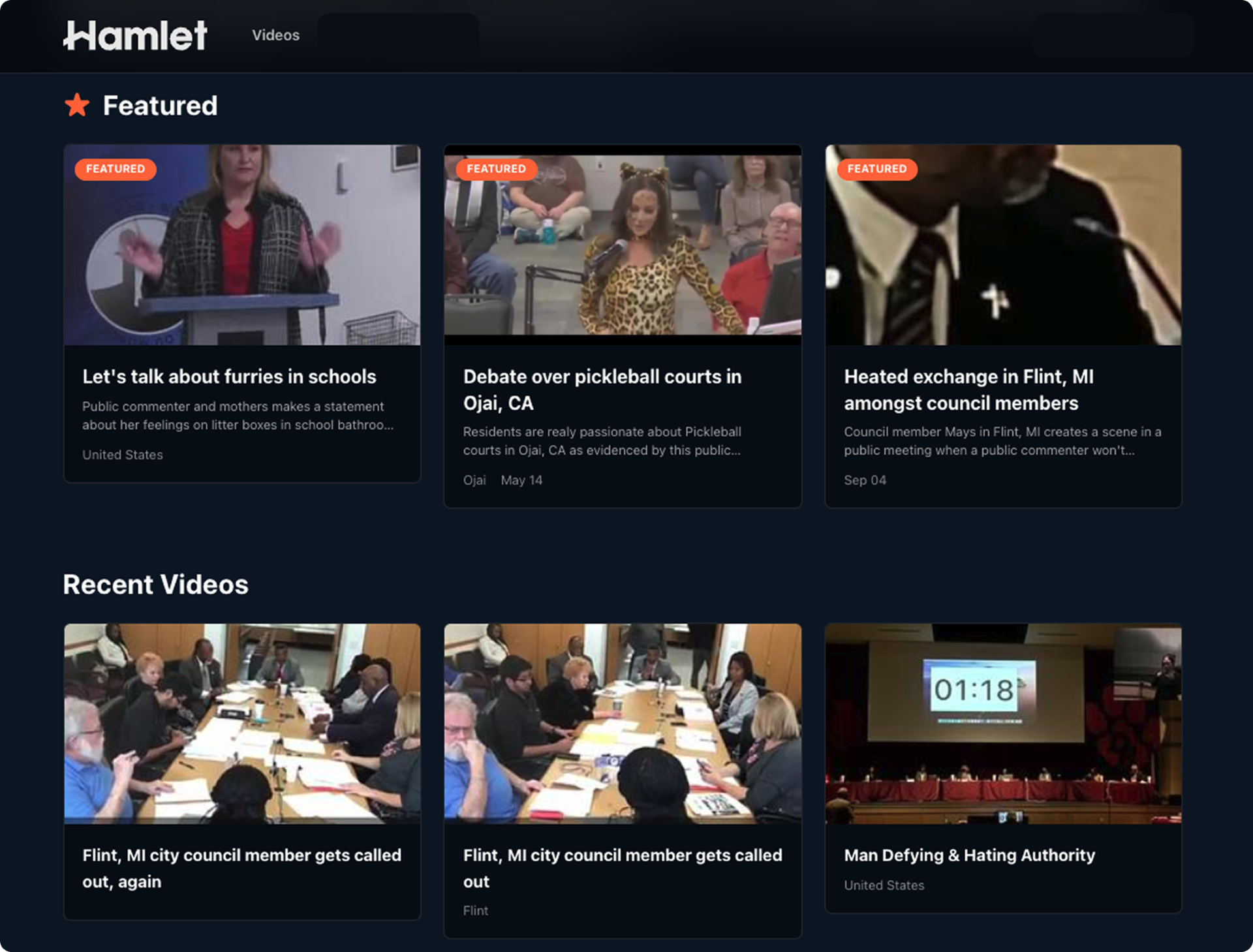
A novel digital initiative, Hamlet, is fundamentally reshaping how citizens and businesses interact with local government proceedings, transforming previously obscure municipal operations into accessible, streamable content. Spearheaded by entrepreneur Sunil Rajaraman, the platform, culminating in the recent launch of Hamlet TV, seeks to dismantle the historical barriers to understanding the decisions made in city halls, planning commissions, and school boards across the nation.
The Genesis of a Civic Tech Solution
The inception of Hamlet was deeply personal for its founder, Sunil Rajaraman. In 2022, his unsuccessful campaign for a city council seat in a small California municipality provided a profound, firsthand encounter with the opaqueness of local governance. Rajaraman recounted the frustration of attempting to grasp the intricacies of his own city’s operations, the rationale behind past decisions, and the key players involved. He described the process as navigating a "total black box," an intentionally convoluted system that actively resisted public scrutiny and comprehension. This personal challenge ignited the vision for a solution that could illuminate these hidden processes.
For decades, civic engagement at the local level has faced significant hurdles. Public information often remained buried in dense, bureaucratic documents or was only accessible through time-consuming attendance at lengthy meetings. The average citizen, balancing work, family, and other commitments, rarely possessed the time or resources to delve into the minutiae of municipal policy-making. This lack of transparency has often been cited as a contributing factor to declining voter turnout in local elections and a general sense of disconnection between residents and their elected officials.
The catalyst for a viable solution emerged unexpectedly from the global health crisis. The COVID-19 pandemic, forcing remote operations across nearly every sector, compelled local governments nationwide to shift their public meetings online. This unprecedented move resulted in thousands of hours of recorded city council, planning commission, and other civic gatherings becoming digitally available, albeit often in raw, unindexed, and unwieldy formats. Rajaraman recognized this burgeoning archive as a potential goldmine of information, if only it could be effectively processed and made searchable. Thus, in 2022, Hamlet was formally launched with the explicit goal of translating this raw data into actionable intelligence.
Leveraging AI for Local Government Insights
At its core, Hamlet employs sophisticated artificial intelligence to process the vast trove of video and audio content generated by municipal meetings. This AI sifts through thousands of hours of recordings from various local government bodies, including city councils, planning commissions, and even school boards, converting the spoken word into searchable, digestible insights. Rajaraman emphasizes that these video archives offer a more accurate and unfiltered account of proceedings compared to traditional meeting minutes, which he characterizes as inherently subjective interpretations. "The video doesn’t lie," he asserted, highlighting the objective nature of the primary source material.
Initially, the venture was conceived as a media company, aiming to synthesize and disseminate this information to the general public. However, the market quickly revealed a broader, equally pressing need. Private sector entities, particularly real estate developers and political action committees, began approaching Hamlet, expressing a keen interest in its analytical capabilities. These organizations, whose operations are significantly impacted by local ordinances and decisions, also struggled with the "black box" phenomenon, requiring deeper, more timely insights into the intricate workings of local governments.
For these enterprise clients, Hamlet offers a comprehensive suite of tools designed to streamline their engagement with municipal processes. The platform can proactively track meeting agendas across target cities, providing alerts when specific, relevant topics are slated for discussion. Following meetings, it synthesizes key outcomes, eliminating the need for corporate teams to watch hours of video. Furthermore, its robust search functionality allows clients to delve into historical archives, enabling them to, for instance, identify when and how a competitor was discussed or a specific policy was shaped within a local government setting. This level of granular insight can inform strategic planning, risk assessment, and advocacy efforts, transforming the way businesses navigate the complex regulatory landscape of local jurisdictions.
Hamlet has successfully attracted significant investment, raising approximately $10 million in venture funding from prominent backers such as Slow Ventures, Crosslink Capital, Banana Capital, and Kapor Capital. Rajaraman articulates an ambitious vision for the company, aiming to establish Hamlet as the "Bloomberg of this space." This analogy suggests a future where Hamlet provides comprehensive, real-time data, analytics, and news pertaining to local government, much as Bloomberg serves the financial industry with its indispensable information terminals and media services.
Expanding Reach: Hamlet TV and Public Engagement
Recognizing the dual imperative of serving both enterprise and public interests, Rajaraman announced a significant expansion of the company’s offerings with the launch of Hamlet TV. This new streaming channel is explicitly designed to empower regular citizens by providing easily digestible insights into the governmental processes that directly affect their daily lives. Available across popular platforms including TikTok, YouTube, AppleTV, and Instagram, Hamlet TV curates and spotlights pivotal moments from council, commission, and school board meetings.
The strategy behind Hamlet TV acknowledges a fundamental challenge in civic engagement: the inherently dry and procedural nature of many government meetings deters casual viewers. To counteract this, Rajaraman and his team have adopted an innovative approach: leveraging humor and engaging storytelling. Having processed thousands of hours of government footage, the team began identifying and curating moments that, while sometimes humorous or unusual, underscore the human element and often the gravity of local decision-making.
"If you show people procedural videos, they are just not going to care," Rajaraman explained, detailing the rationale behind their content strategy. "But if you show them the funny stuff, they’ll watch." This approach taps into contemporary media consumption habits, particularly the preference for short-form, engaging content prevalent on platforms like TikTok. By making civic discourse more entertaining, the aim is to lower the barrier to entry for a broader audience, fostering a greater sense of investment in the democratic process.
The content on Hamlet TV goes beyond mere levity. While the team has encountered genuinely surprising moments—such as a resident addressing a city council dressed as a cockroach to highlight a pest control issue—Rajaraman emphasizes that the true revelation lies not in the oddities, but in the profound significance and persistent obscurity of these meetings. He cited the example of the Tucson city council’s decision earlier this year to reject Amazon’s proposed $3.6 billion data center. This high-stakes decision, the culmination of months of planning and deliberation, likely went unwatched by all but a handful of deeply invested individuals, despite its immense economic and social implications for the community. Such instances underscore the critical need for platforms like Hamlet to bridge the information gap.
The Broader Implications for Democracy and Business
The implications of Hamlet’s technology extend far beyond mere convenience. On a societal level, increased transparency and accessibility to local government proceedings can significantly bolster democratic health. When citizens are better informed about the issues, the debates, and the decisions shaping their communities, they are more empowered to participate meaningfully—whether through voting, advocacy, or even running for office themselves. This fosters a more accountable and responsive government, strengthening the social contract between the governed and their representatives.
For local journalism, which has faced significant economic challenges and staff reductions in recent decades, Hamlet’s tools offer a potential lifeline. With fewer reporters available to cover the multitude of local government meetings, critical information often goes unreported. Rajaraman plans to offer the core Hamlet tool to local journalists for free, recognizing that while data is vital, "context matters so much." This partnership could enable struggling newsrooms to efficiently monitor more meetings, uncover important stories, and provide deeper, more nuanced reporting, thereby enhancing their crucial role as watchdogs of local power.
Economically, businesses and advocacy organizations stand to gain immense strategic advantages. For industries like renewable energy development, which often require extensive local permitting and community engagement, understanding the pulse of municipal sentiment and policy direction is paramount. Hamlet’s ability to track legislative trends, identify key stakeholders, and monitor public discourse can mitigate risks, accelerate project approvals, and foster more effective community relations. This translates into more efficient operations and potentially greater investment in local economies.
Sunil Rajaraman is no stranger to the entrepreneurial landscape, nor to the media industry. His past ventures include co-founding Scripted, an analytics platform, serving twice as an Entrepreneur-in-Residence at Foundation Capital, and running The Bold Italic, a publication he later sold to Medium. This background provides a unique blend of technological acumen, media insight, and an understanding of content dissemination, all of which are critical to Hamlet’s multifaceted mission.
Challenges and the Path Forward
While the vision for Hamlet is compelling, its path forward is not without challenges. Scaling the platform to encompass thousands of municipalities across the diverse landscape of the U.S. will require significant technological and operational investment. Ensuring the AI’s accuracy in processing and summarizing nuanced discussions, especially in politically charged environments, will be paramount to maintaining the platform’s credibility and objectivity. Furthermore, the engagement strategy of using "funny moments" must be carefully balanced to avoid trivializing serious issues or inadvertently contributing to misinformation, though Rajaraman’s emphasis on the consequential nature of the meetings suggests a mindful approach.
Despite these complexities, the overarching philosophy driving Hamlet remains clear and resolute: "Democracy works better when people are watching," Rajaraman affirms. "We’re trying to make watching possible." The company’s immediate future plans include deepening its engagement with government affairs departments, advocacy organizations, and, specifically, renewable energy developers, all of whom benefit from a more transparent and predictable local governance landscape.
In an era where information overload often coexists with critical information gaps, Hamlet represents a significant leap forward in civic technology. By leveraging AI to demystify the inner workings of local government and by employing engaging media strategies to reach a broader audience, the platform aims to empower citizens, strengthen local journalism, and provide vital intelligence to businesses, ultimately fostering a more informed, engaged, and resilient democracy from the ground up.