Amir Mahmud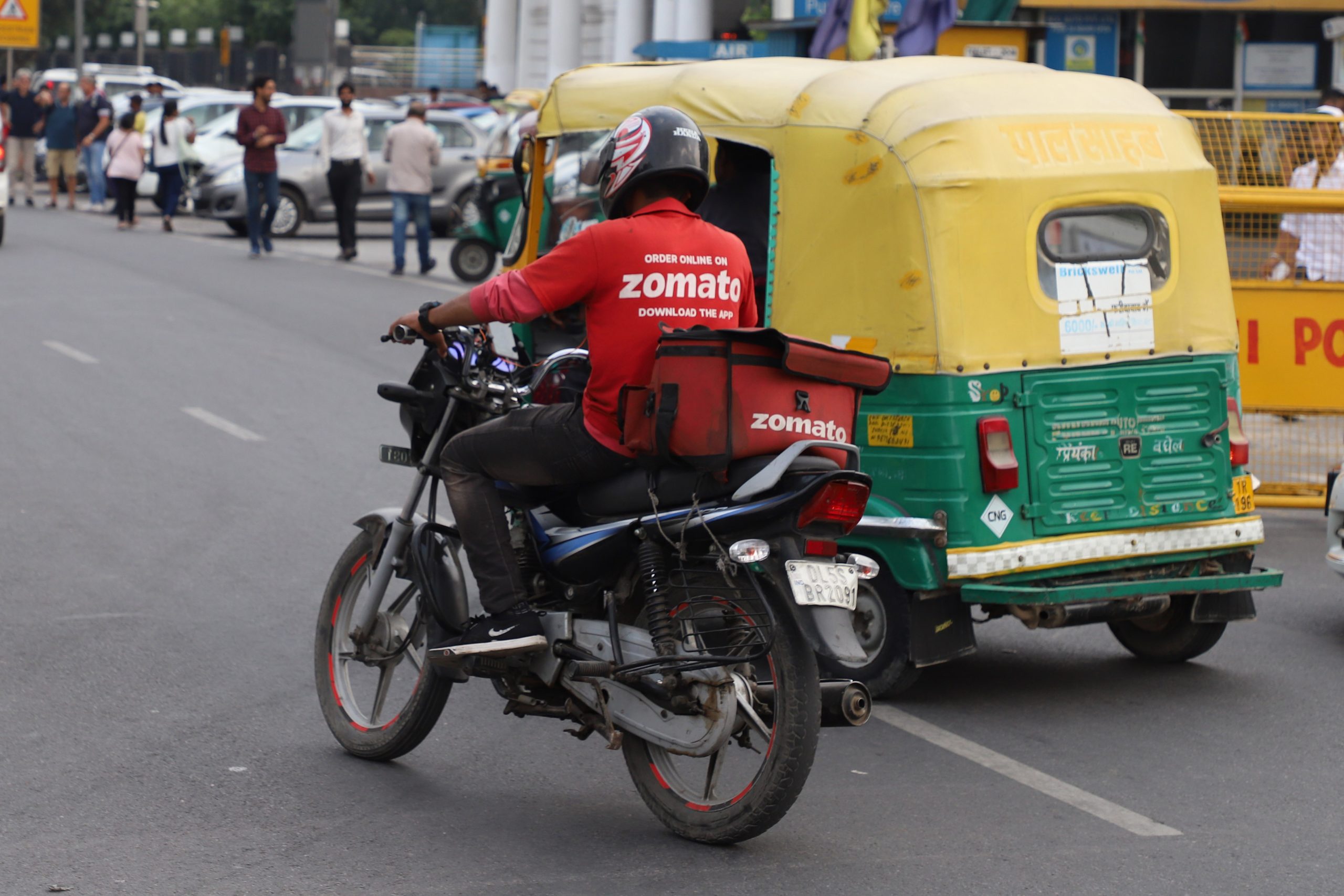
India has taken a monumental step in acknowledging its vast and rapidly expanding gig economy, formally granting legal status to millions of platform and on-demand workers under a new set of labor codes. This landmark legislative move, implemented on Friday, represents a significant victory for the delivery, ride-hailing, and e-commerce workforce, yet the practical realization of comprehensive social security benefits for these workers remains a complex and unfolding challenge. While the legal recognition provides a crucial foundation, the specific mechanisms for accessing entitlements and the full scope of benefits are still largely undefined, leaving a considerable path ahead for both policymakers and the workers themselves.
The Genesis of India’s Gig Economy
India’s gig economy is among the largest and fastest-growing globally, driven by a confluence of technological advancement, a burgeoning young population, and significant underemployment in traditional sectors. Estimates suggest that over 12 million individuals currently engage in gig work, performing essential services such as food delivery, ride-hailing, package sorting for e-commerce giants, and a myriad of other on-demand tasks for digital platforms. This sector has emerged as a vital source of livelihood, particularly for young adults and internal migrant workers who often face barriers to entry in the formal job market. The reliance on digital platforms for daily conveniences has deeply embedded gig services into the urban fabric, and this trend is projected to accelerate as companies further scale their logistics, retail, and hyperlocal delivery operations across the nation.
Major domestic and international players underpin this digital ecosystem. Companies like Amazon and Walmart-owned Flipkart, alongside prominent Indian quick-delivery applications such as Swiggy, Blinkit (formerly Eternal), and Zepto, and ride-hailing services including Uber, Ola, and Rapido, depend heavily on this flexible workforce to power their operations in what is the world’s second-largest internet and smartphone market after China. Despite their critical role in fueling some of India’s most valuable tech enterprises, a significant majority of these gig workers have historically operated without the protections afforded by traditional labor laws, lacking access to fundamental social security provisions. Their status as independent contractors rather than employees often left them vulnerable to precarious working conditions, income instability, and an absence of safety nets.
Legislative Milestones and Frameworks
The recent legal recognition of gig and platform workers stems from the Code on Social Security, one of four new labor codes that the Indian government brought into effect on Friday. These codes, initially passed by parliament in 2020 after more than five years of deliberation, represent a broad overhaul of the nation’s outdated labor laws. However, the Code on Social Security stands as the sole piece of this new legislative framework that specifically addresses gig and platform workers. The other three codes – encompassing wages, industrial relations, and workplace safety – do not extend guarantees like minimum earnings, employment protections, or standardized working conditions to this rapidly expanding segment of the workforce.
This selective inclusion highlights a deliberate policy choice by the Indian government to create a distinct category for gig workers, rather than integrating them into the existing framework for traditional employees. This approach mirrors ongoing global debates about the classification of gig workers, seeking to balance the flexibility inherent in platform work with the imperative of providing a social safety net. The new legal definitions for "gig worker" and "platform worker" are crucial first steps, as they provide a statutory basis for their inclusion in future social welfare schemes.
Navigating the Social Security Code
Under the newly implemented Code on Social Security, the primary mechanism for extending benefits involves requiring "aggregators" – the digital platforms that connect workers with customers – to contribute a percentage of their annual revenue to a government-managed social security fund. Specifically, aggregators are mandated to contribute between 1% and 2% of their annual turnover, capped at 5% of the total payments made to gig workers. This financial contribution is intended to establish a dedicated pool of resources for worker welfare.
While the framework is established, the critical details remain largely opaque. Questions abound regarding the precise benefits that will be offered, the mechanisms by which workers will access these benefits, how contributions will be effectively tracked across individuals who may work for multiple platforms, and when payouts will actually commence. These ambiguities have sparked concerns that the materialization of meaningful protections could be a protracted process, potentially taking years to fully implement. The Code on Social Security conceptually covers various schemes, including the Employees’ State Insurance (ESI), provident fund (PF), and government-backed insurance. However, the specific eligibility criteria, contribution levels, and delivery mechanisms for these benefits are contingent upon future rules and scheme notifications yet to be formulated.
A cornerstone of the new framework is the establishment of Social Security Boards at both the central and state levels. These boards are tasked with the crucial responsibility of designing, overseeing, and administering welfare schemes tailored for gig and platform workers. The central board is mandated to include five representatives each from gig and platform workers and aggregators, all nominated by the government, alongside senior officials, experts, and state representatives. However, the operational dynamics of these boards, including how decisions will be made, the actual influence of worker representatives, and who will ultimately control funding and benefit delivery, are still largely undefined. This raises questions about the boards’ effectiveness and their ability to truly represent the diverse interests of the gig workforce.
Federalism and Implementation Challenges
A significant layer of complexity arises from India’s federal structure, where labor policy falls under the "concurrent list" of the Indian Constitution. This means that both the federal and state governments share legislative power, with state governments often responsible for designing, notifying, and administering many of the schemes required to make the Code on Social Security operational for gig workers.
This shared responsibility inherently introduces the possibility of uneven access to social security benefits across different regions. Some states may prioritize and swiftly establish social security boards and roll out robust mechanisms, while others might delay or deprioritize these efforts due to political considerations, fiscal constraints, or administrative inertia. Recent examples underscore this potential disparity: Rajasthan’s landmark legislation for gig workers, passed in 2023, has reportedly stalled, while Karnataka quickly moved to notify its own Gig Workers Act soon after clearing the state assembly. Such divergence highlights that the extent of worker protections may ultimately depend more on a worker’s geographical location than on the central law itself, creating a patchwork of rights and benefits across the country.
Industry Reactions and Operational Shifts
Platform companies, the primary aggregators of gig work, have largely offered public support for the labor reforms, albeit while cautiously evaluating the precise implications for their operations. An Amazon India spokesperson indicated the company’s support for the government’s intent behind the labor overhaul and stated that they are actively assessing the necessary changes. Similarly, a spokesperson for Zepto welcomed the new labor codes as "a big step toward clearer, simpler rules that protect workers while supporting ease of doing business." The company expressed optimism that these changes would strengthen social security for its delivery partners without compromising the operational flexibility critical to quick-commerce models. Eternal, formerly Zomato, stated in a stock exchange filing that the Social Security Code represents a move towards more uniform rules and that it does not anticipate the financial impact to threaten its long-term business viability.
Despite this cautious optimism, experts anticipate tangible financial and compliance impacts. Aprajita Rana, a partner at corporate law firm AZB & Partners, noted that the formalized worker contributions "will naturally have a financial impact" on India’s e-commerce sector. Beyond financial outlays, companies will face new compliance obligations. These include ensuring all workers in their networks are registered with the government-managed fund, developing systems to identify individuals associated with multiple aggregators to prevent duplicative benefits, and establishing internal grievance mechanisms. Rana also pointed out that while the law’s intent is commendable, the "novel" structure of gig work in India means "practical challenges in compliance will emerge as the law takes force."
Worker Engagement and Advocacy
A significant hurdle for gig workers seeking to benefit from the new law is the registration process on the Indian government’s E-Shram portal. Launched in 2021 as a national database for unorganized workers, the portal had registered just over 300,000 platform workers by the end of August, a stark contrast to the government’s own estimate of approximately 10 million gig workers. This low registration rate points to substantial outreach and logistical challenges.
Trade unions, such as the Indian Federation of App-Based Transport Workers (IFAT) and the Telangana Gig and Platform Workers Union (TGPWU), are actively working to assist their members with enrollment. However, Ambika Tandon, a PhD candidate at the University of Cambridge and an affiliate of the national trade union Centre of Indian Trade Unions (CITU), highlighted a practical impediment: the time commitment required for registration. For workers often engaged in demanding shifts, sometimes up to 16 hours a day, taking time off to navigate a government portal can mean a direct loss of wages, making enrollment a difficult choice.
Furthermore, many gig workers and their advocates argue that the immediate benefits of registering on the E-Shram portal are not compelling enough. Workers frequently cite more pressing concerns such as fluctuating earnings, arbitrary account suspensions, and sudden termination of accounts as issues that directly impact their daily livelihoods, often overshadowing the perceived long-term value of insurance or provident fund benefits. This disconnect between legislative offerings and immediate worker needs can undermine the efficacy of the new law.
Trade unions frequently organize strikes to pressure platforms into addressing these immediate concerns. However, such actions carry significant risks for workers, including lost wages during the strike and potential termination for participation, while also disrupting services for consumers. Shaik Salauddin, founder president of TGPWU and national general secretary of IFAT, underscored this sentiment: "While the social security rules have now been put in place, we demand a minimum wage and an employer-employee relationship for gig and platform workers, which are yet to be set by the government." He urged the government to leverage data from aggregators to secure monetary contributions and expedite benefit disbursements. CITU is among ten major Indian trade unions that have called for the withdrawal of the new labor laws, planning nationwide protests, signaling deep-seated discontent with the broader reform package.
The Global Perspective: Defining Gig Work
The Indian government’s decision to classify gig and platform workers as a distinct category, rather than extending them full employee status, places it within a broader global discussion on the nature of modern work. This approach explicitly avoids granting them the comprehensive rights and protections typically associated with traditional employment, such as minimum wages, paid leave, and severance.
In contrast, several other jurisdictions have adopted different stances. Courts and regulators in markets like the U.K., Spain, and New Zealand have increasingly moved towards recognizing platform workers as "workers" or even "employees," thereby entitling them to a range of benefits and protections. For instance, Uber in the U.K. now treats its drivers as workers following a Supreme Court ruling. Similarly, Spain agreed on labor reform that recognizes delivery platform riders as employees. In some U.S. jurisdictions, there have been pushes for platform workers to be treated as employees or similarly protected, though many ride-hail and delivery drivers still remain classified as independent contractors, reflecting the ongoing legal battles and policy fragmentation even within single countries.
Ambika Tandon observed that with this new law, the Indian government has effectively "settled this debate by saying that these gig workers do not sit within the ambit of employment or other protections" within the Indian context. This decision has profound implications for the future trajectory of worker rights in India’s digital economy, setting a precedent that may define labor relations for years to come. The Indian labor ministry did not respond to a request for comment on these developments.
The Road Ahead for India’s Digital Workforce
India’s move to grant legal status to its gig workers is undeniably a significant political and social statement, acknowledging the indispensable role this workforce plays in the national economy. It signals a governmental intent to address a long-standing gap in labor protections for a rapidly growing segment. However, the journey from legal recognition to tangible, accessible social security benefits is fraught with practical, administrative, and political challenges. The success of this landmark legislation will ultimately hinge on the clarity of future rules, the efficiency of implementation, the equitable functioning of the Social Security Boards, and the government’s willingness to adapt and refine its policies based on ground-level realities and the evolving needs of its diverse gig workforce. As India continues to digitize and its gig economy expands, the efficacy of this framework will serve as a critical test case for balancing economic dynamism with social equity in the 21st century.