Amir Mahmud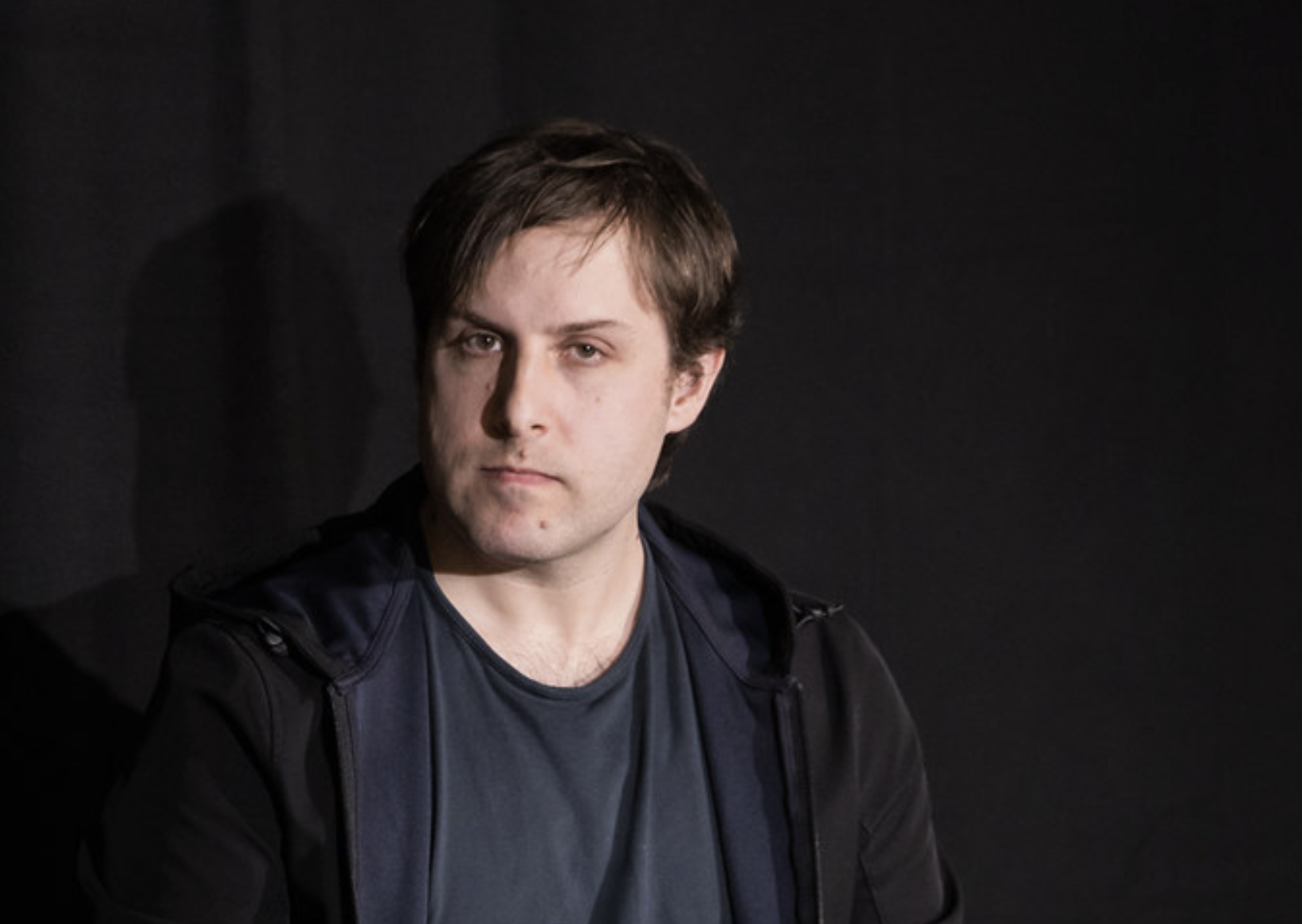
Max Hodak, a figure whose name is synonymous with the foundational years of Neuralink, is now spearheading Science Corp., a venture that promises to redefine the very boundaries of human intellect and perception. While his previous endeavor, co-founded with Elon Musk, aimed at creating high-bandwidth brain-computer interfaces (BCIs) to address neurological conditions, Hodak’s new company harbors aspirations that reach far beyond conventional medical applications, envisioning a future where human consciousness itself might be engineered and expanded. This ambitious trajectory places Science Corp. at the forefront of a burgeoning field, pushing not only technological limits but also fundamental questions about identity and existence.
Hodak’s journey into the intricate world of neuroscience began at a remarkably young age, cultivating a deep fascination with programming from six years old. His academic path led him to Duke University, where he immersed himself in the pioneering neuroscientific research conducted by Miguel Nicolelis. Nicolelis, a celebrated figure in brain-machine interfaces, would later express reservations about the commercialization of BCI technology, a stance that highlights the complex ethical and practical considerations inherent in this rapidly advancing domain. In 2016, Hodak joined forces with Elon Musk to co-found Neuralink, serving as its president and effectively managing its daily operations until his departure in 2021. His tenure there provided him with invaluable insights, particularly regarding Musk’s distinctive approach to problem-solving. Hodak recalled situations where faced with seemingly irreconcilable options, Musk’s decisive pronouncements, often choosing the less obvious path, invariably led to successful resolutions, a pattern that profoundly influenced Hodak’s own leadership style and strategic thinking.
A Shifting Landscape for Brain-Computer Interfaces
The realm of brain-computer interfaces, once confined to the pages of science fiction, has rapidly evolved into a tangible and highly competitive technological frontier. Historically, the scientific community has been exploring methods to decode neural signals for decades. Early research, dating back 30 years or more, successfully demonstrated the ability to control cursors or robotic arms directly from brain activity. These foundational discoveries laid the groundwork for the current wave of innovation, moving BCI from academic labs to commercial enterprises.
Today, the BCI market is experiencing exponential growth, attracting significant investment and interest from global tech giants and national governments alike. Data from the World Economic Forum indicates that nearly 700 companies worldwide are now engaged in BCI-related technologies. Microsoft Research, for instance, has maintained a dedicated BCI project for the past seven years, exploring various applications. Apple recently forged a partnership with Synchron, a company backed by prominent investors like Bill Gates and Jeff Bezos, to develop a protocol enabling BCIs to interface with iPhones and iPads. Even Sam Altman, CEO of OpenAI, is reportedly supporting a rival to Neuralink, underscoring the widespread belief in the transformative potential of this technology.
Beyond corporate ventures, nations are also recognizing the strategic importance of BCI. China, for example, recently unveiled its "Implementation Plan for Promoting Innovation and Development of the BCI Industry," setting ambitious targets for core technological breakthroughs by 2027 and aiming for global leadership by 2030. This geopolitical dimension further accentuates the race to unlock the brain’s secrets and harness its capabilities.
Despite this surge in activity, Hodak acknowledges a common critique: much of the underlying neuroscience isn’t entirely novel. The true innovation, he asserts, lies in the engineering. While decoding neural signals has been a long-standing pursuit, the ability to create devices that are sufficiently miniaturized, energy-efficient, and biocompatible for safe, long-term implantation—without posing infection risks or requiring external components—represents a significant leap forward. This engineering prowess is what differentiates the current generation of BCI companies, including Neuralink, and enables the practical application of established neuroscientific principles.
Engineering the Breakthrough: From Research Tools to Retinal Implants
Unlike many BCI startups that operate solely on venture capital with distant commercialization horizons, Science Corp. is strategically building revenue streams to fund its audacious long-term goals. One aspect of this strategy involves developing and selling advanced research tools. Hodak points to their success in transforming cumbersome, expensive recording systems—originally costing $300,000 and occupying a cart-sized footprint—into portable, handheld devices priced at just $2,000. This approach not only generates capital but also fosters innovation within the broader neuroscience community.
However, the more immediate and impactful commercial "unlock" for Science Corp. is a groundbreaking procedure known as Prima. This technology, which recently garnered significant media attention, involves the implantation of a computer chip, smaller than a grain of rice, directly into the retina. When paired with camera-equipped glasses and a two-pound battery pack, the Prima system is designed to restore "form vision" to individuals suffering from advanced macular degeneration. This condition, a leading cause of vision loss in older adults, progressively damages the macula, the central part of the retina responsible for sharp, detailed vision, profoundly impacting quality of life.
The clinical trial results for Prima have been highly encouraging. In studies involving 38 patients, Science Corp. reported that 80% regained the ability to read, albeit two letters at a time. Hodak highlights this achievement as potentially the first definitive demonstration of fluent reading restoration in blind patients. Science Corp. acquired the Prima technology from the French company Pixium Vision, subsequently refining it, completing ongoing trials, and submitting the results for regulatory approval in Europe, with a projected launch next summer. While the company is actively engaging with the U.S. Food and Drug Administration (FDA), the timeline for American approval remains uncertain. Even with an initial estimated cost of $200,000 per procedure, Hodak believes that treating just 50 patients per month would render Science Corp. profitable, underscoring the significant market need and the potential economic viability of this advanced medical intervention.
The Promise of Optogenetics and Neural Regeneration
Beyond the immediate commercialization of Prima, Science Corp. is actively pursuing even more ambitious therapeutic avenues. The next significant step involves optogenetic gene therapy, a revolutionary technique that aims to make neurons light-sensitive, thereby allowing them to be controlled with light rather than traditional electrodes. This concept, while not entirely new, is being refined by Science Corp. with what they claim are superior proteins and targeting strategies.
In conditions like macular degeneration, photoreceptor cells in the retina die off, leaving the deeper bipolar cells intact but without light input. Prima bypasses the dead photoreceptors by directly stimulating these bipolar cells with electrodes. Optogenetic gene therapy seeks to eliminate electrodes altogether. Instead, surviving retinal cells are genetically engineered to express new light-sensitive proteins, allowing them to respond directly to light and transmit visual information to the brain. Hodak notes that the eye is an ideal target for gene therapy due to its "immune-privileged" status, meaning it tolerates engineered cells expressing foreign proteins without triggering a severe immune response, unlike other parts of the body.
The ultimate aspiration, however, lies in the realm of neural regeneration: the ability to grow new brain tissue. Hodak critiques current electrode-based BCI approaches, including Neuralink’s, for their inherent limitations. Electrodes, by their very nature, are invasive and cause micro-damage to delicate brain tissue. While this trade-off might be justifiable for severe conditions like spinal cord injuries or blindness, it fundamentally limits the scalability of such interfaces to millions or billions of channels needed for truly transformative cognitive enhancements.
Science Corp. proposes a radical alternative: a device resembling a tiny waffle grid, designed to sit on the brain’s surface rather than being inserted deep within. Each "well" in this grid would contain engineered neurons grown from stem cells, optimized for specific functions. Once implanted, these laboratory-grown neurons would extend new axons and dendrites, forming biological connections with the existing neural circuits of the brain. A proof-of-concept study in mice demonstrated partial success, with five out of nine mice learning to perform specific movements when the device was activated. Hodak emphasizes the biocompatibility of this approach, describing it as "neurons talking to neurons, the way evolution intended," with the crucial distinction that some neurons originate from a lab. To address safety concerns, Science Corp. has incorporated a "kill switch" mechanism, allowing engineered neurons to be selectively eliminated through the administration of a specific, FDA-approved vitamin.
Unlocking Consciousness: Hodak’s Ultimate Ambition
As the conversation progresses, Hodak reveals the profound philosophical underpinnings of Science Corp.’s endeavors, framing BCI as a "longevity-adjacent story." His ultimate quest extends beyond mere biological repair or enhancement; it aims at nothing less than cracking the code of consciousness itself. Hodak posits that the brain performs two primary functions: intelligence and consciousness. While intelligence has proven to be "substrate-independent"—manifesting in both biological brains and artificial intelligence systems like GPUs—the final frontier of BCI, in his view, is the creation of "conscious machines."
This objective involves understanding the fundamental physical laws governing subjective experience, a concept neuroscientists often refer to as "the binding problem"—how billions of disparate neural activities coalesce into a unified, coherent conscious experience. Once these laws are comprehended, Hodak believes it will be possible to engineer consciousness into novel substrates. The implications are staggering, suggesting the potential for radically altering the very nature of individual identity. Hodak speculates about "redrawing the border around a brain," envisioning scenarios where consciousness could encompass multiple hemispheres, external devices, or even entire groups of people. This vision, reminiscent of dystopian narratives like the Apple TV show "Pluribus," which depicts humanity transformed into a hive mind, raises profound questions about autonomy, individuality, and the future of human society. While acknowledging the uncertainty surrounding how such technology might be utilized, Hodak expresses confidence in its eventual realization. This path, he suggests, could lead not merely to smarter humans, but to beings whose consciousness transcends individual bodies and minds, merging with machines and each other.
Societal Ripples: Ethics, Economics, and the Future of Humanity
The timelines Hodak outlines are remarkably near-term, imbuing his ambitious claims with an unsettling sense of immediacy. He predicts that by 2035, biohybrid neural interfaces will be accessible to patients in need, initiating a significant "deformation" of the world. By the late 2040s, a mere two decades away, he foresees these technologies becoming "really ubiquitous." While initially confined to severe medical cases, Hodak notes that as individuals age, "many people eventually become patients," suggesting a gradual expansion of the user base as the technology improves, surgeries become safer, and benefits become more dramatic.
A particularly striking prediction for 2035 is the scenario where a patient facing a terminal illness might be offered a choice: "You can die of pancreatic cancer, or you can be inserted into the matrix." This chilling proposition underscores the potential for BCI to fundamentally alter our relationship with mortality, offering an alternative to biological demise through consciousness preservation or transference.
These revolutionary advancements, however, come with profound societal and economic implications. Hodak highlights a critical conflict within the healthcare system, which he describes as operating on a "fixed bucket of money." Unlike consumer technology, where innovation typically leads to better, cheaper products and market expansion, healthcare costs tend to escalate with new, life-extending technologies. As BCIs proliferate and deliver superior outcomes and longer lives, the demand for healthcare spending will surge, potentially overwhelming existing economic models. This, Hodak warns, could lead to a catastrophic breakdown of the healthcare system.
The most concerning social implication of this economic reality is the potential for exacerbating class divisions. If advanced BCI technologies, particularly those offering cognitive enhancements like perfect recall or instantaneous calculation, become prohibitively expensive, they could create a stark divide between a cognitively augmented elite and the rest of humanity. Such a scenario would raise serious ethical questions about fairness, access, and the very definition of human potential.
Despite these monumental implications, Hodak expresses more immediate concern over phenomena like information manipulation through traditional media platforms such as social networks, viewing it as a more pressing threat than direct brain interfaces. Yet, the vision he articulates—a future where consciousness can be engineered, transferred, and merged—forces a re-evaluation of what it means to be human. The journey from treating macular degeneration to potentially transcending biological limitations is long and fraught with both immense promise and profound ethical dilemmas. As Science Corp. progresses, the world will be watching, grappling with the astonishing possibilities and the unsettling questions that Max Hodak’s vision inevitably provokes.