Amir Mahmud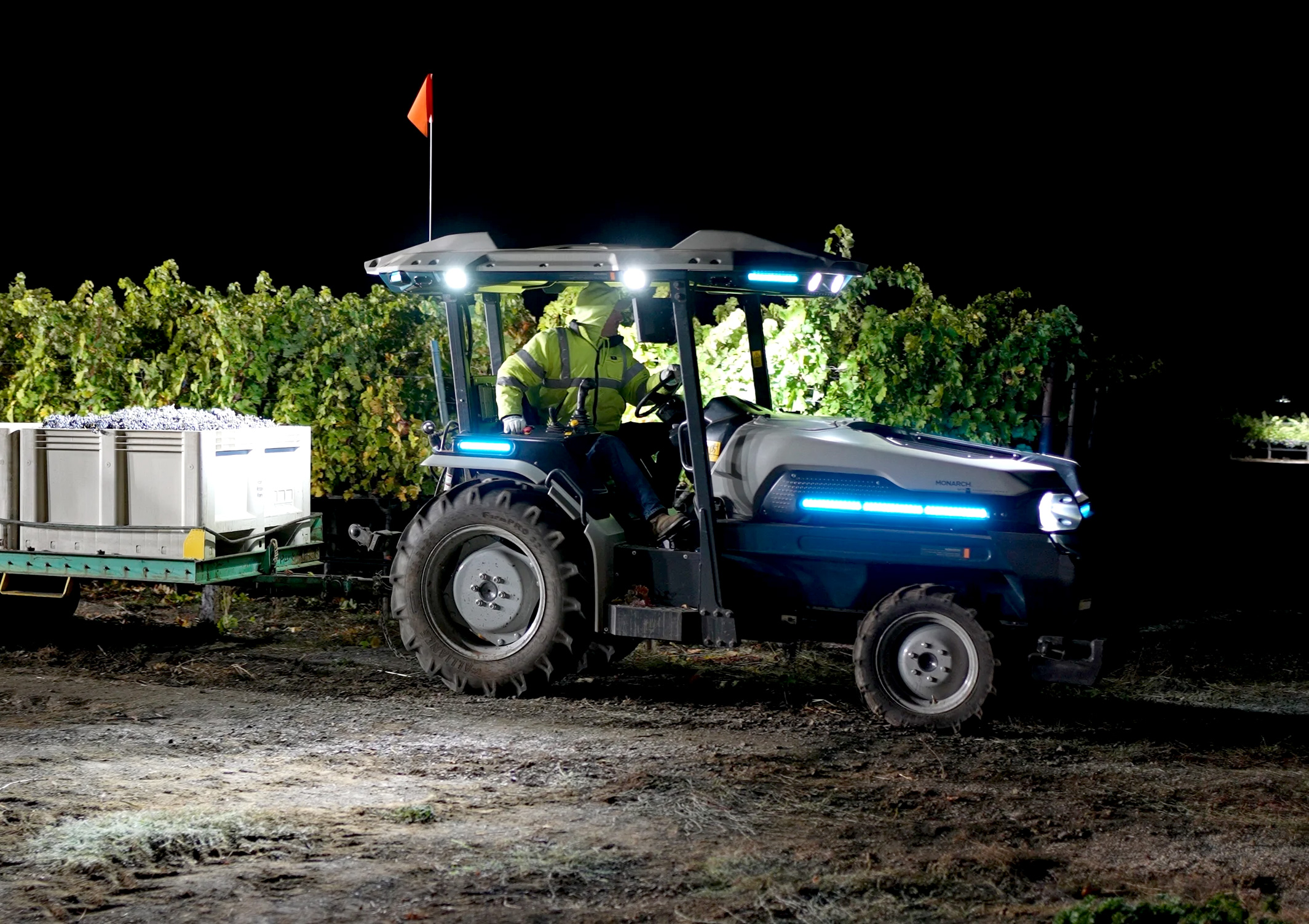
Monarch Tractor, a startup that aimed to revolutionize agriculture with its autonomous electric tractors, has issued a stark warning to its employees, indicating that it may be forced to lay off over 100 staff members and is facing the very real possibility of a complete shutdown. This alarming development, conveyed in a company-wide memo obtained by TechCrunch, casts a significant shadow over the future of a company that once garnered substantial venture capital investment and held ambitious plans for sustainable, automated farming. The announcement comes on the heels of several weeks of smaller workforce reductions impacting corporate facilities in California and remote teams spanning India and Singapore, signaling a prolonged period of financial distress and strategic uncertainty for the burgeoning agritech firm.
The Precipice of Closure
The internal communication to Monarch Tractor’s workforce on Thursday outlined the severe challenges confronting the company, explicitly stating that "the timing for completing the transition to the new business plan puts Monarch at risk of shut down." The memo detailed plans for potential permanent layoffs affecting "up to 102 employees," a significant portion of its remaining staff. While the exact current headcount is undisclosed, the company had approximately 300 employees in late 2024 when it initiated a restructuring that included laying off more than 10% of its personnel. This latest round of proposed cuts and the looming threat of closure underscore the immense pressure on the company to secure its financial viability and redefine its operational model.
A Vision Rooted in Innovation
Monarch Tractor emerged onto the agricultural technology scene in 2018 with a compelling vision: to merge electrification, automation, and data intelligence to create a more efficient and sustainable farming future. The company was co-founded by a distinguished team, including a former top executive from Tesla’s inaugural gigafactory, Mark Schwager, and Carlo Mondavi, a scion of the renowned winemaking family. This blend of automotive electrification expertise and deep agricultural roots fueled early investor confidence. The initial concept centered on developing "driver optional" autonomous electric tractors designed to perform labor-intensive tasks in environments like vineyards and fruit orchards, addressing critical issues such as labor shortages, rising fuel costs, and the environmental impact of traditional diesel machinery.
The agritech sector, aiming to modernize an industry often characterized by conservative adoption of new technologies, had been experiencing a surge of interest and investment. Monarch Tractor quickly became a poster child for this movement, attracting substantial funding. The company raised at least $220 million, a remarkable sum for a hardware startup, with a significant portion—$133 million—secured as recently as 2024. This influx of capital reflected strong investor belief in the potential for autonomous electric farming solutions to transform an essential global industry, promising higher yields, reduced operational costs, and a smaller carbon footprint. The involvement of individuals with backgrounds from industry disruptors like Tesla further amplified expectations, suggesting that Monarch could bring Silicon Valley’s innovation ethos to the farm.
Navigating the Agritech Landscape
The journey from concept to commercial viability in agricultural technology, particularly for hardware-intensive solutions, is fraught with unique challenges. Unlike software, which can iterate rapidly, hardware development demands significant upfront capital, lengthy research and development cycles, complex manufacturing processes, and rigorous testing in diverse real-world environments. Agricultural settings, with their unpredictable weather, varied terrains, and specialized operational demands, present particularly complex scenarios for autonomous systems. The promise of "driver optional" functionality relies on sophisticated sensor arrays, advanced AI algorithms, and robust mechanical engineering, all of which require continuous refinement and substantial investment.
The broader market impact of successful agritech innovation could be profound. Autonomous tractors promise to mitigate the chronic labor shortages facing farmers worldwide, increase operational efficiency by allowing machines to work longer hours and with greater precision, and reduce reliance on fossil fuels, aligning with global sustainability goals. However, the path to widespread adoption involves overcoming not only technological hurdles but also cultural resistance within traditional farming communities, concerns over data privacy, and the high initial capital expenditure for new equipment. Monarch Tractor’s ambitious goals placed it at the forefront of this complex intersection of technology, economics, and environmental stewardship, making its current struggles a bellwether for the sector.
Pivots and Production Pains
Despite shipping approximately 500 of its autonomous tractors to date, Monarch Tractor’s strategic direction began to shift in late 2024. The company announced a restructuring aimed at expanding its tractors to other use cases, such as pushing feed at dairy farms and maintaining golf courses. More significantly, CEO Praveen Penmesta indicated a strategic pivot towards focusing more on selling software services and licensing the company’s autonomous technology. This move from a direct hardware sales model to a software-as-a-service (SaaS) and licensing approach is a common tactic for hardware startups facing scaling challenges, allowing them to leverage their intellectual property without the capital intensity of continuous manufacturing.
This strategic reorientation was made more urgent by significant operational setbacks. Earlier this year, Monarch Tractor lost its contract manufacturing partner, Foxconn, after the technology giant sold the Ohio factory where Monarch’s tractors were slated for production. Contract manufacturing is a critical component for many hardware startups, providing access to established production lines, supply chain expertise, and economies of scale without the need for massive internal investment in facilities and labor. The unexpected dissolution of this partnership undoubtedly disrupted Monarch’s production capabilities and forced a reevaluation of its core business model, pushing it further towards a software-centric approach.
Performance Under Scrutiny
Adding to Monarch Tractor’s woes, the performance of its autonomous technology has come under legal scrutiny. A lawsuit filed by Burks Tractor, an Idaho dealership and one of Monarch’s early partners, alleges that the autonomous technology never functioned reliably, if at all. According to the lawsuit, first reported by TechCrunch, Burks Tractor claimed that Monarch sold it "defective" vehicles that experienced "significant problems" upon arrival in 2024, primarily highlighting their inability to operate autonomously. While Monarch has denied these claims in court filings, such allegations from a key customer and dealer can be devastating for a young company attempting to build trust and market share in a nascent industry.
The lawsuit underscores the immense difficulty of perfecting autonomous systems for real-world application, especially in the dynamic and unpredictable environment of agriculture. Developing technology that can reliably navigate fields, identify obstacles, perform precise tasks, and operate safely without human intervention requires extensive validation and robust engineering. Failures in core functionality not only undermine customer confidence but also highlight the gap between ambitious technological promises and practical, commercial deployment. For Monarch Tractor, these legal challenges likely compounded its financial difficulties and put additional pressure on its ability to attract new customers and investors.
The Software Shift: A Last-Ditch Effort?
In response to these mounting challenges, Monarch Tractor is attempting an even more aggressive pivot, signaling a near-complete divestment from tractor manufacturing. The company’s human resources team articulated this new direction in the memo, stating, "The new business plan will enable Monarch customers to launch fully commercialized software as a service (SaaS) autonomy and other software offerings direct to consumers, unlocking new revenue streams to OEMs." This strategy aims to reposition Monarch as a provider of advanced agricultural autonomy software and intellectual property, rather than a manufacturer of physical tractors.
The shift to a pure software and licensing model, while potentially less capital-intensive, is a complex undertaking, especially under the threat of shutdown. It requires Monarch to successfully transition from a hardware-focused engineering culture to one centered on software development, customer support for diverse OEM integrations, and robust intellectual property management. Furthermore, the market for licensing advanced agricultural autonomy software to Original Equipment Manufacturers (OEMs) is competitive and demands a proven, reliable, and adaptable technology stack. The timing of this pivot, described as putting Monarch "at risk of shut down," suggests that the company is racing against the clock to prove the viability of this new direction before its resources are entirely depleted.
Talent Exodus and Investor Scrutiny
The internal turmoil at Monarch Tractor has also been reflected in the departure of key personnel. This year saw the exit of top talent, including co-founder Mark Schwager, the former Tesla executive. Schwager, who initially played a crucial role in establishing Monarch’s technological foundation, announced his transition from an executive role to remaining on the company’s board in a July LinkedIn post. At the time, he expressed optimism, stating, "Monarch is in great position and in great hands for the next leg of its trajectory – making the timing right for this transition." In retrospect, this statement, though perhaps sincere at the time, now stands in stark contrast to the company’s current precarious situation, raising questions about internal awareness of the impending crisis.
For venture capital investors who poured over $200 million into Monarch Tractor, the current developments represent a significant setback. The substantial investment, particularly the $133 million raised in 2024, indicates high hopes for a rapid scale-up and market penetration. The potential failure of Monarch Tractor would be a costly lesson in the challenges of backing capital-intensive hardware startups in complex industries. Investors typically seek exponential growth and clear pathways to profitability or acquisition, and the current state suggests that Monarch has struggled to deliver on those expectations, despite its innovative vision and prominent founders.
Broader Implications for Agritech
Monarch Tractor’s struggles carry broader implications for the autonomous agriculture industry and the venture capital landscape that funds it. The challenges faced by Monarch highlight the inherent difficulties in translating groundbreaking technological concepts into commercially successful and sustainable products within the agricultural sector. It underscores the need for not just innovation, but also robust execution, flawless product reliability, effective market penetration, and sustainable financial models.
While the long-term potential of autonomous, electric farming remains widely recognized as a crucial component of future food security and environmental sustainability, Monarch’s plight serves as a cautionary tale. It emphasizes that despite significant investment and high-profile backing, the path to revolutionizing traditional industries with advanced technology is often longer, more complex, and more capital-intensive than initially anticipated. The industry will be watching closely to see if Monarch Tractor can successfully navigate this critical juncture, or if its ambitious vision will ultimately succumb to the formidable realities of developing and scaling agricultural hardware and software in a demanding market.